Blog / Indigenous Cannabis Canada
Walking the Territory: CannaCrawl and Indigenous Cannabis
A week on the road through Six Nations, Kettle Point, Walpole Island, and Oneida — what Indigenous cannabis retail looks like up close.
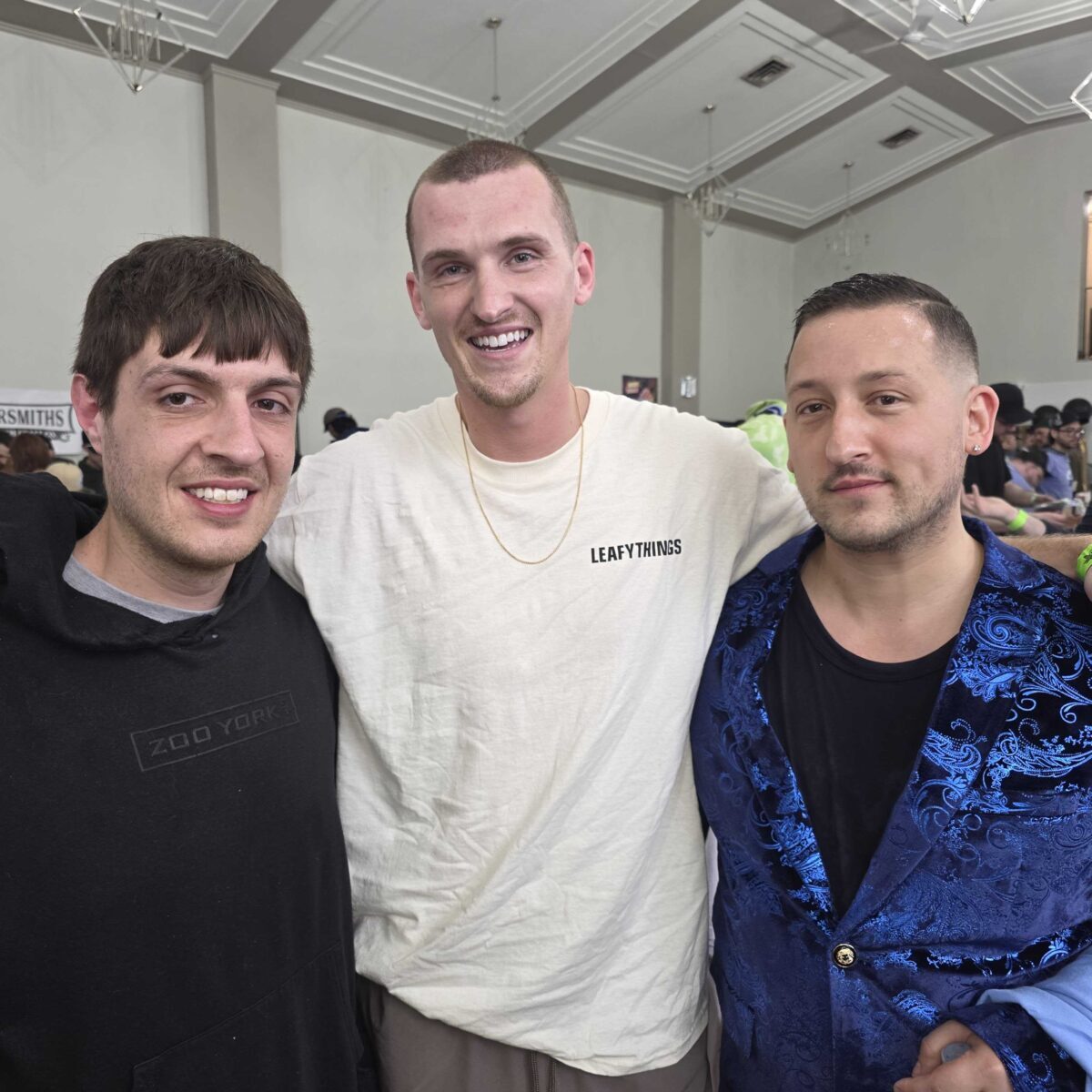
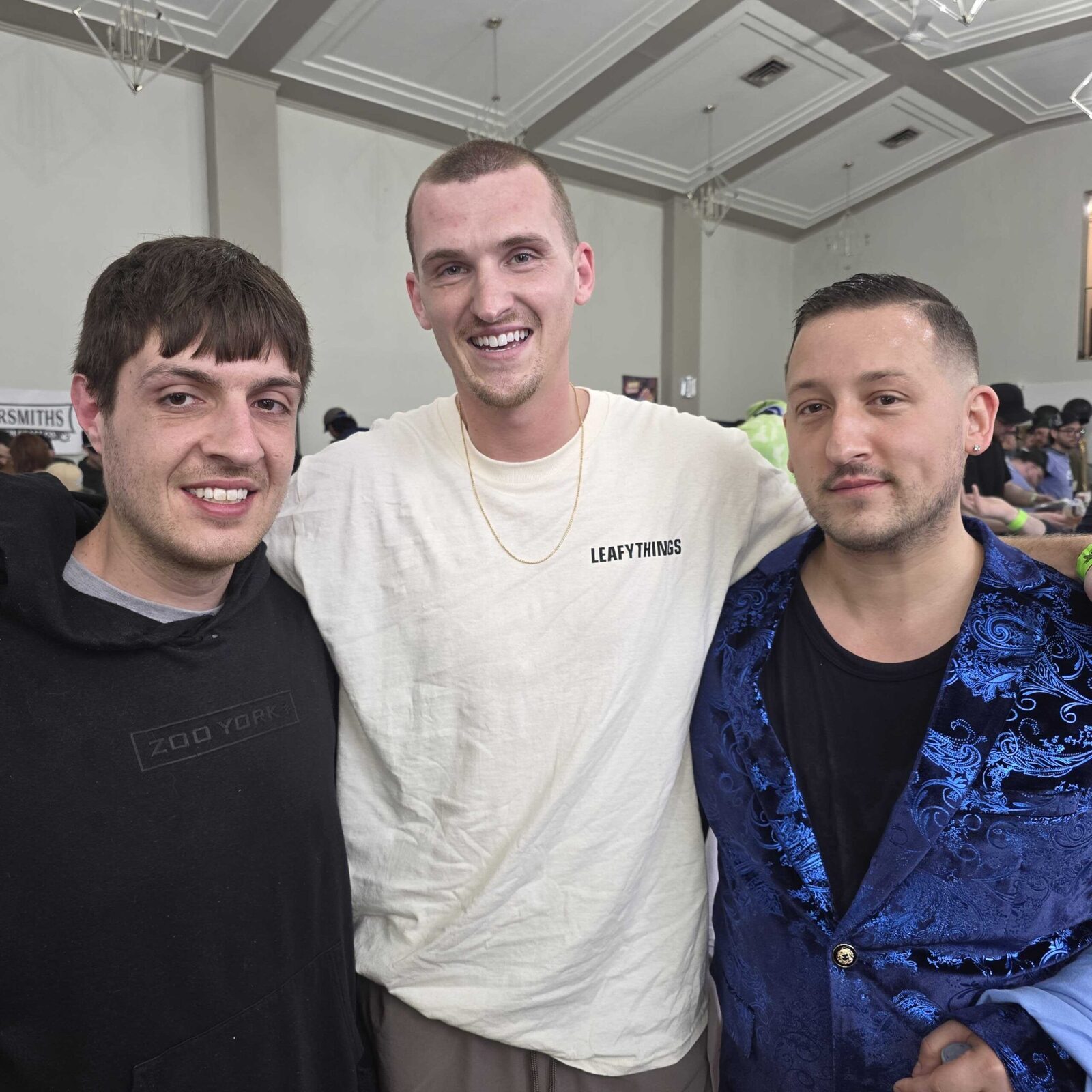
There’s a moment that captures everything about where Indigenous cannabis is right now. Alex, Director of Sales at Brother Processing, is waiting a bit past his scheduled stage time at the CannaCrawl, getting steadily warmer in a sweltering basement where someone is serving captured smoke through a straw in a cup. When he finally takes the stage in his loud blue blazer, a little warm, a little foggy and delivers an impactful speech about what BPS stands for and why — a man in the audience walks up afterward and says he wants to open two new stores. That’s the Indigenous cannabis market in 2026: improvised, electric, and growing faster than the infrastructure can keep up.
The CannaCrawl — a legacy cannabis-community expo organized by Indigenous groups and held in Hamilton, Canada, this spring — was the launching pad for what became a full week of ground-level outreach across some of Ontario’s largest and most historically significant reserves: Six Nations of the Grand River, Kettle Point, Walpole Island, Sarnia, Oneida, and Moravian of the Thames. The trip was organized and executed by Brother Processing’s Alex and Jordan, with a mandate to introduce dispensary owners and operators to three interconnected platforms: BrotherProcessing.com (Indigenous-accessible payment processing for cannabis retailers), BrotherPOS (a self-branded point-of-sale system built and hosted by Brother Processing), and Rezweed.com — the platform that may matter most to the communities themselves.
Rezweed: A Cannabis Retailer Map for Indigenous Dispensaries Nationwide
Rezweed is best understood as what Weedmaps should have been for Indigenous Canada but wasn’t. Developed by BPS’s own tech lead, Jordan, a dispensary discovery and listing platform built specifically around reserve-based cannabis retailers — businesses that often operate in a regulatory grey zone, are invisible to mainstream cannabis apps, and have historically lacked any digital storefront at all.
The timing is significant. Indigenous cannabis retail in Canada has grown rapidly since individual First Nations began asserting jurisdiction over cannabis regulation on their territories, operating outside the federal licensing framework under their own band-issued permits. Hundreds of dispensaries now operate on reserves from coast to coast. But most exist in a kind of digital darkness — no Weedmaps listing, no Google Business profile, no online menu. A customer driving through Six Nations might not know which of three Big Smoke locations carries what. A consumer curious about a new shop in Walpole Island has nowhere to look.
Rezweed aims to be that infrastructure — and the CannaCrawl week showed both the opportunity and the challenge in building it.
The platform’s SEO traction is already real. By the time Alex and Jordan rolled into Six Nations, Rezweed was already appearing above Big Smoke Six Nations in search results — a meaningful achievement for a platform still in its early days, and a proof point that was not lost in conversations with store owners. Resweed site traffic following the events was, in Alex’s word, “phenomenal.”
But the data problem is real, too. Rezweed currently automates a significant portion of its store listings by pulling from the Google Places API — meaning the accuracy of listings is only as good as the underlying Google data, which can be outdated. Shannon’s Puffy Place, signed up on the spot in Walpole Island, still wasn’t showing on Rezweed despite appearing on Google Maps. Updating that data requires a backend ping to Google’s servers, a small cost the team flagged for internal approval. It’s a solvable problem — but it’s illustrative of the work required to build digital infrastructure in a space that’s been historically underserved.
Heat, Free Weed, and the Art of Showing Up
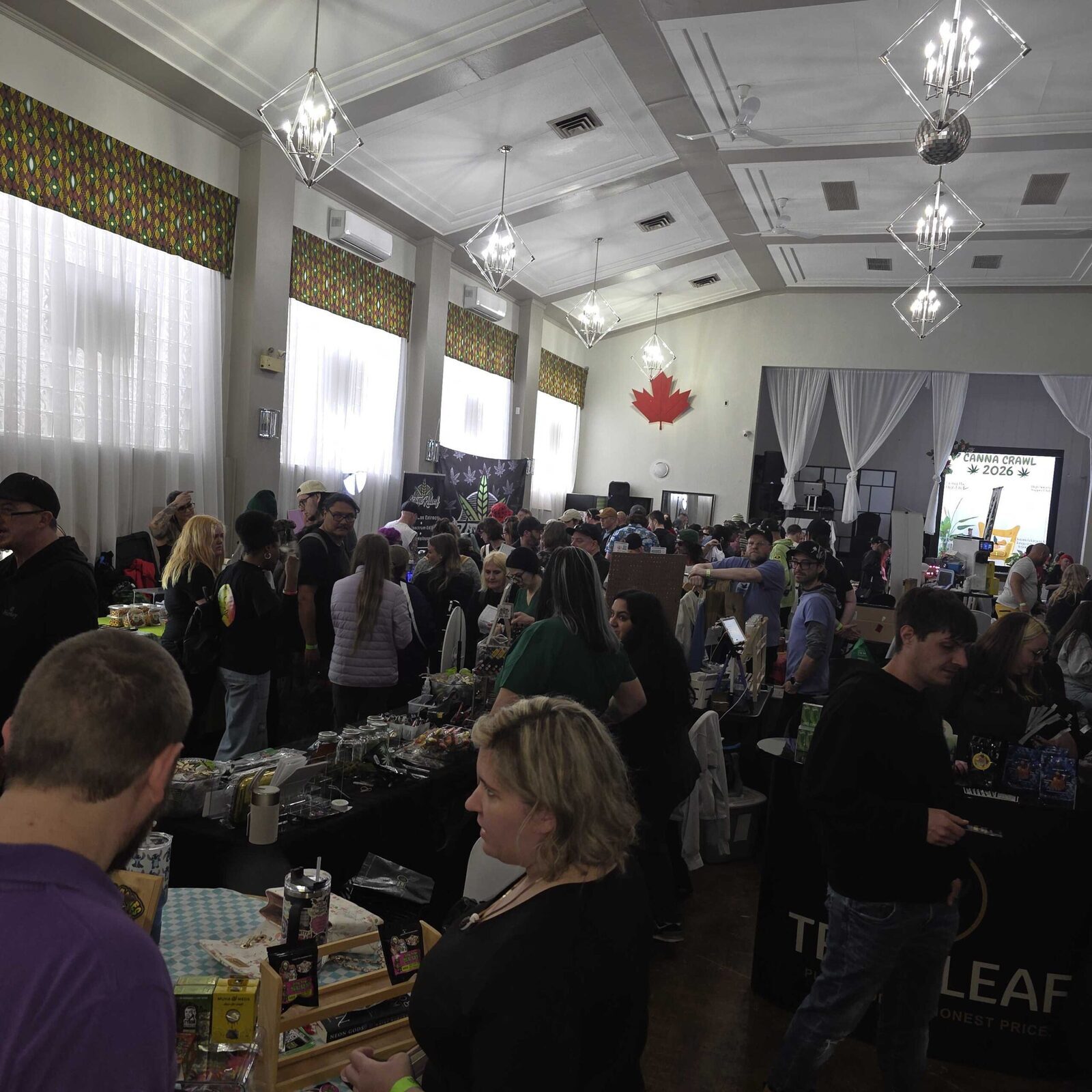
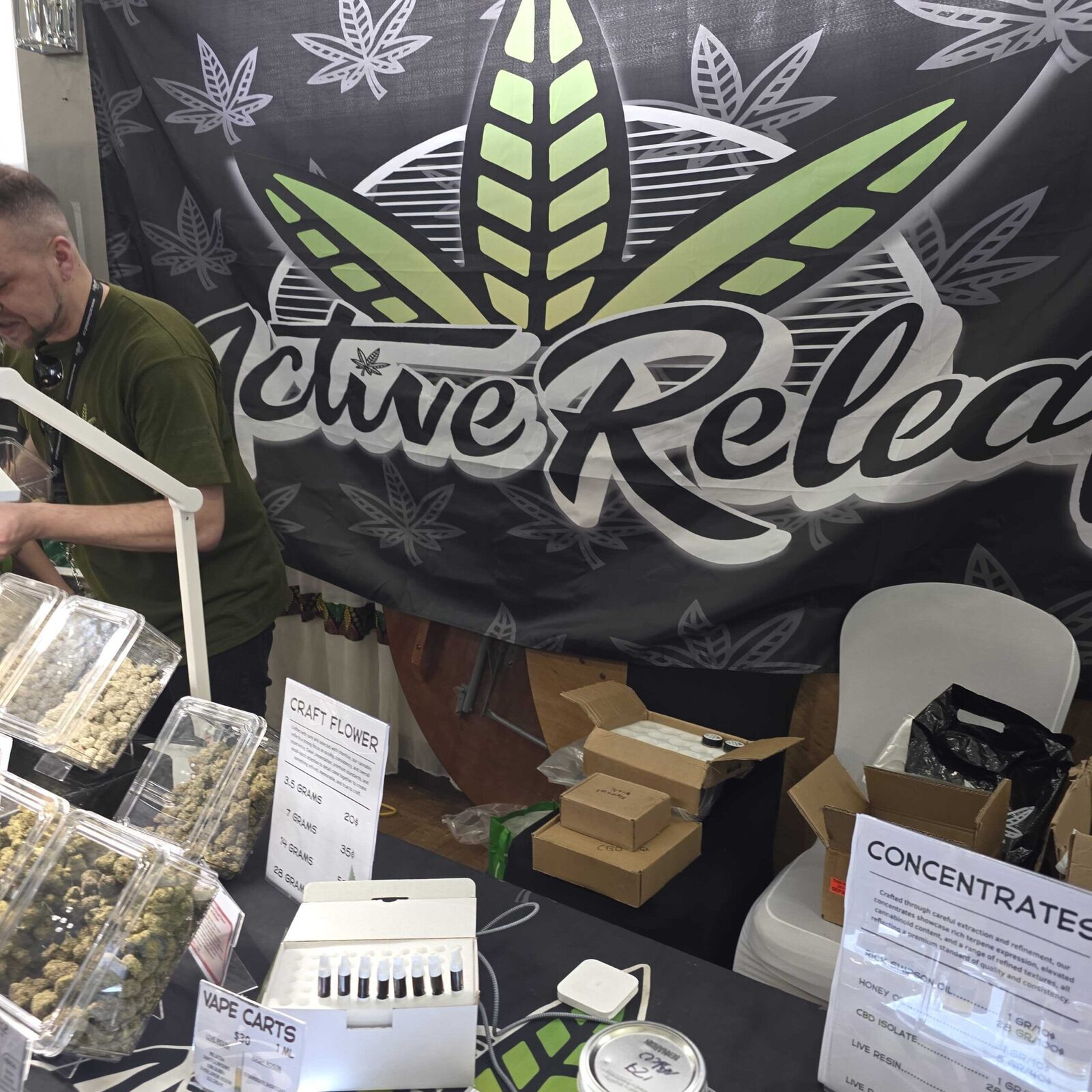
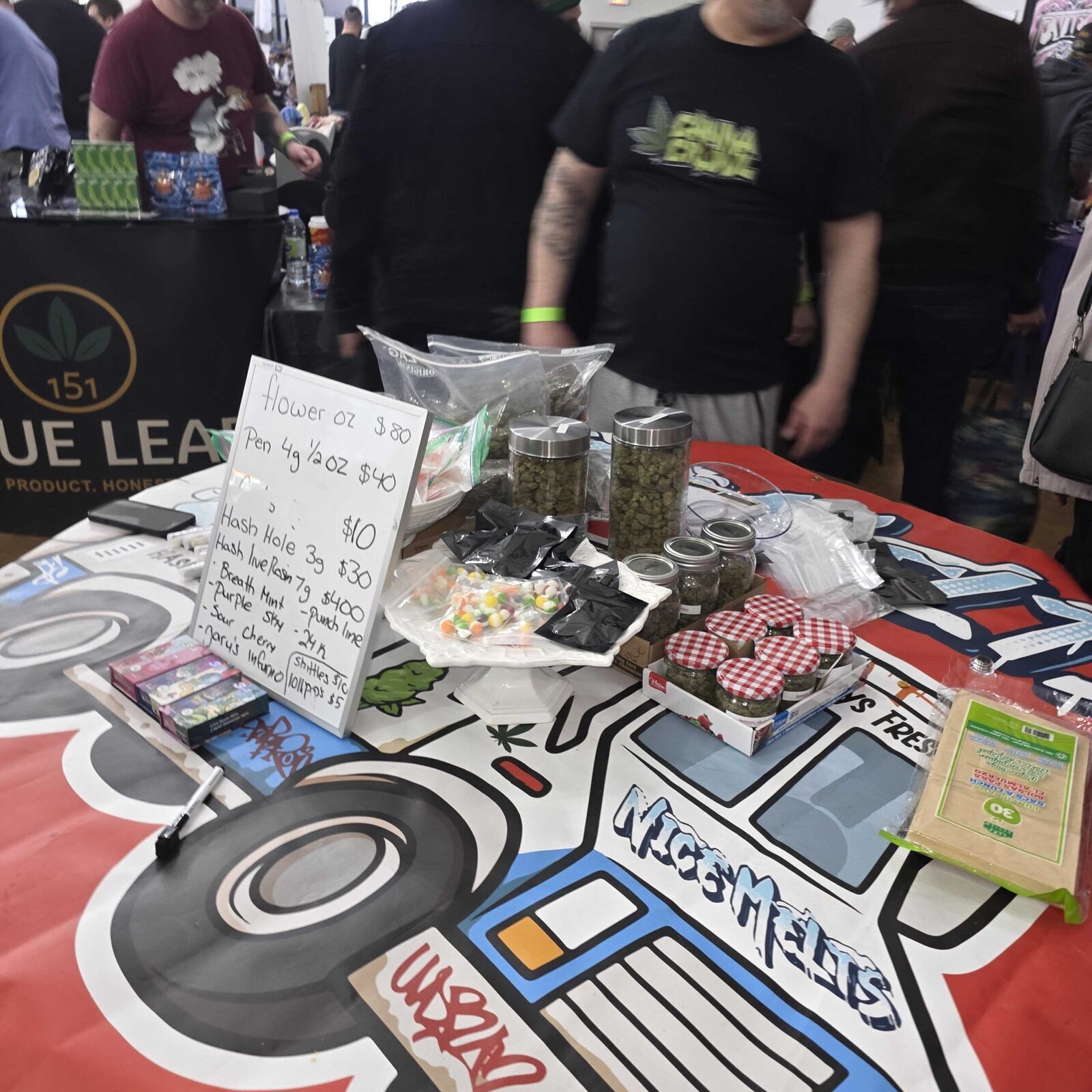
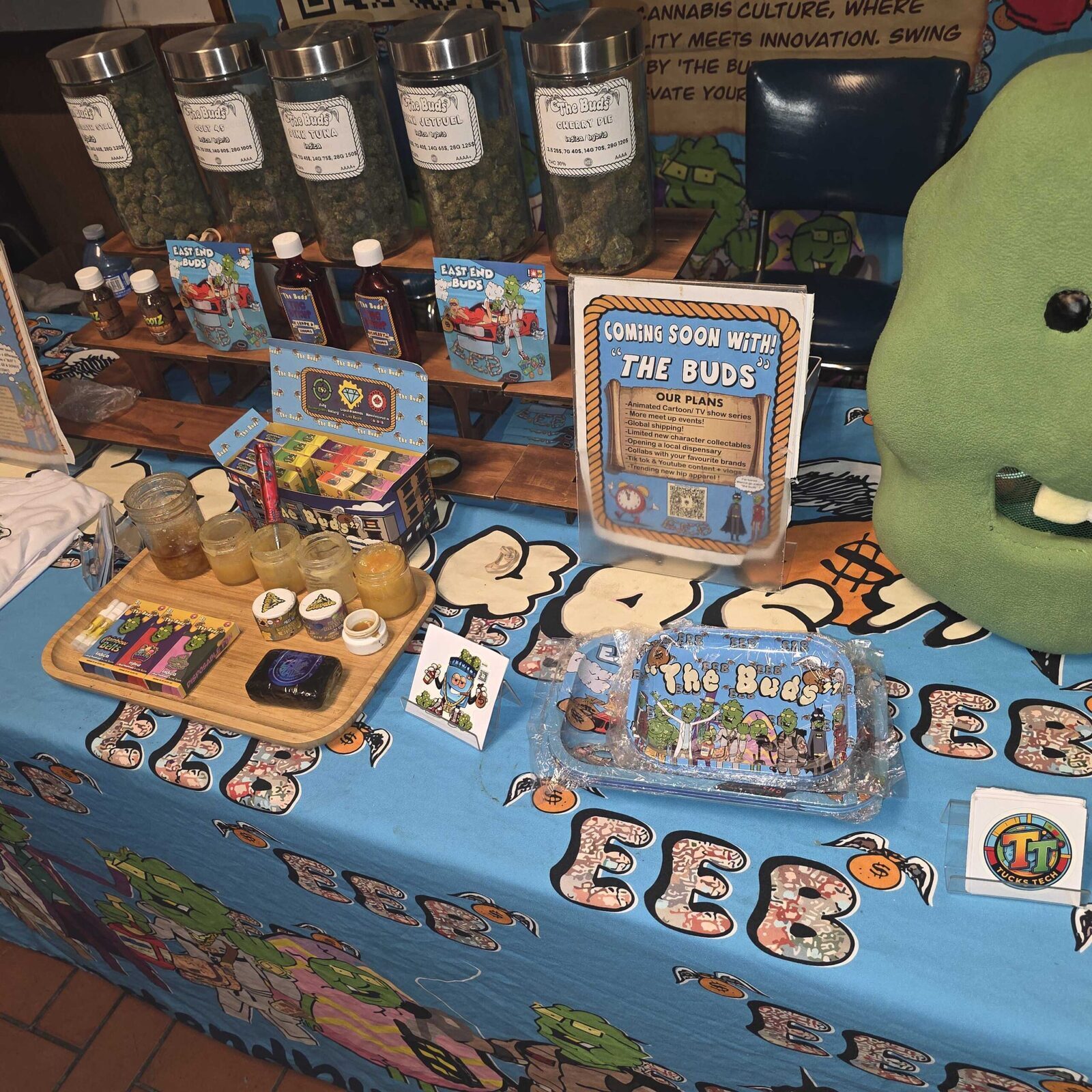
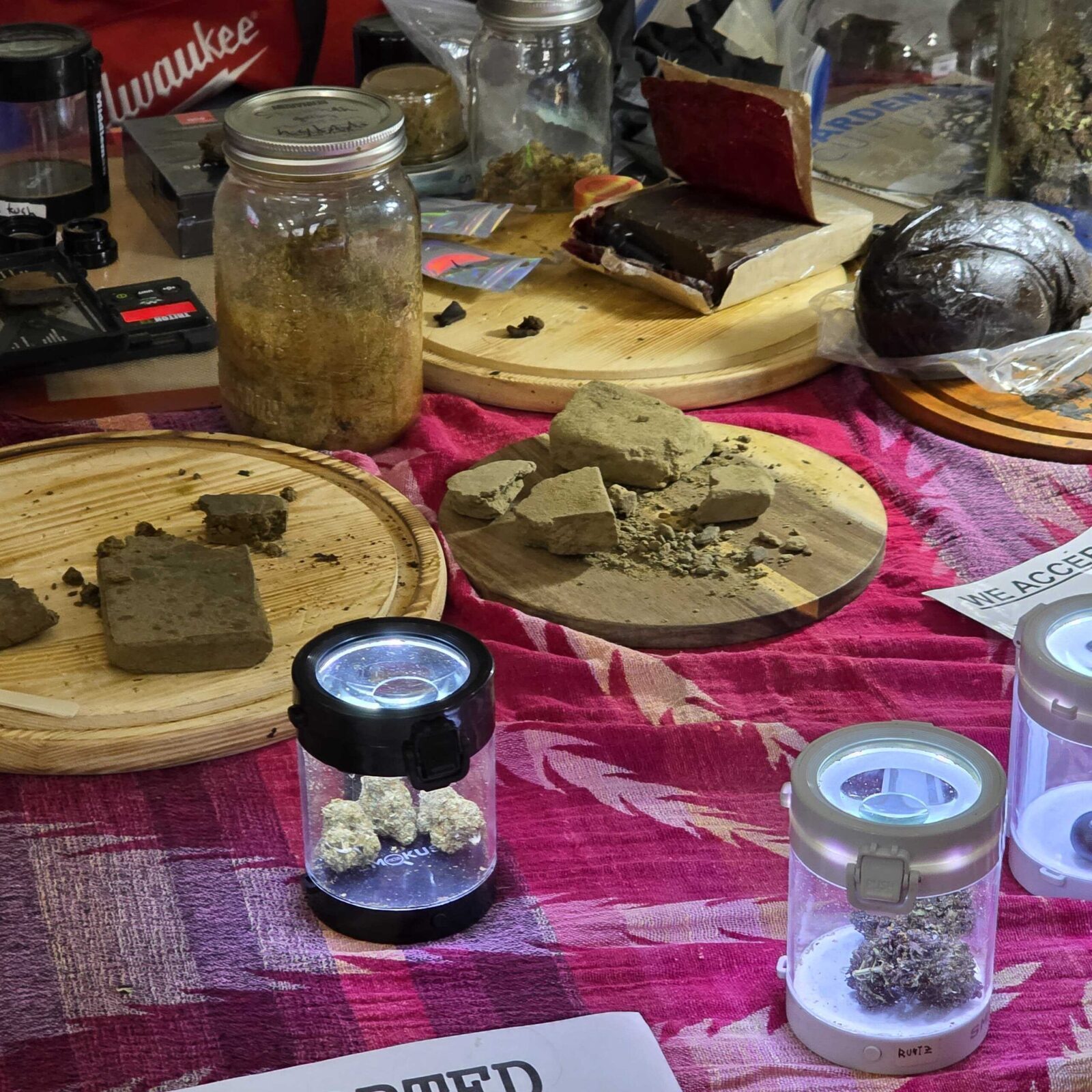
The CannaCrawl itself was a testament to community resilience. Event organizer Reena had to relocate the venue at the last minute after the original site double-booked and pulled out — then rebuilt the entire setup on the day of the event. The result: a well-attended expo with a packed main floor, vendor booths, live stage programming, and a basement “hot box” where free dabs and experimental consumption methods were part of the atmosphere.
The heat was brutal. The energy was high. And Alex walked in with a loud blue blazer and a half-pound of cannabis to give away for free.
The strategy was deliberate. Rather than standing behind a booth waiting for foot traffic, Alex and Jordan moved through the crowd distributing cannabis baggies — what he called a “Santa Claus run” that took all of 20 minutes and generated more attention, conversation, and goodwill than hours of passive exhibition would have. By the time his name was called for the stage, he’d already met half the room.
It worked. Beyond the new-store lead from the speech, the team came away with multiple warm connections, signed up new clients (we can’t list just yet), and several live demos on the spot, including Big Smoke, one of the reserve’s dominant cannabis retailers.
For July’s next CannaCrawl, the plan is to scale up freebie giveaways—directing recipients straight to the Rezweed platform where they can list their dispensary.
The Significance of Six Nations
It’s worth pausing on where this trip went and what that means. Six Nations of the Grand River is the largest First Nations reserve in Canada by population, home to over 27,000 members across six Haudenosaunee (Iroquois) nations. Its cannabis market is correspondingly significant — Big Smoke alone operates three retail locations.
For years, businesses of this scale have processed payments in cash only, or through workarounds that left them exposed. The absence of mainstream payment processors — who either decline cannabis businesses outright or face regulatory complexity around reserve-based commerce — has been both a business risk and a symbol of broader economic marginalization.
Brother Processing’s pitch is specifically designed for this gap. This payment infrastructure, paired with BrotherPOS, offers Indigenous cannabis retailers a purpose-built solution that doesn’t ask them to retrofit their business model to fit a platform designed for provincially licensed stores.
The road trip also hit Kettle Point and Stoney Point (Aazhoodena) First Nation, Walpole Island (Bkejwanong Territory), and smaller stops through Oneida Nation of the Thames and Moravian of the Thames — communities that are less commercially prominent than Six Nations but equally underserved by mainstream cannabis commerce infrastructure.
Cannabis as Cultural Reclamation
To understand why the CannaCrawl matters beyond a business event, it helps to consider the broader context. Cannabis has deep roots in Indigenous ceremonial and medicinal practice, even as its specific history varies by nation and region. The modern era of reserve-based cannabis retail is, for many communities, not simply an economic opportunity — it’s an assertion of sovereignty, a rejection of a federal system that criminalized their communities at vastly disproportionate rates and then structured legalization to primarily benefit corporate license-holders.
The CannaCrawl and events like it are spaces where that reclamation is visible and communal. They’re celebrations of a cannabis culture that has existed outside the licensed mainstream, now finding new form. The presence of businesses like Brother Processing — showing up to offer tools rather than take a cut, listening before pitching, and attending the Burnout car show — reflects an approach to this community that is more partner than vendor.
That posture matters. Trust is the currency in these spaces. Alex’s blue blazer and free bags of weed weren’t gimmicks — Jordan’s expertise in designing Rezweed - they were signals that BPS was there to participate, not extract.